


Sample search engine results page (SERP)
What a supply chain operator looks like in RIF’s search: one sample result, with its profile, industry vertical, years in business and three sets of performance metrics. Text in brackets marks where each operator’s own data appears.
The search
Enter industry or vertical (type of business)
Just start typing… select… then click RIF Search
An illustration only: this static website cannot run searches. The field returns you to the search panel on the home page and its list of industry verticals.
Sample result: one supply chain operator

[Industry vertical description]

[Years in business & annual revenues]






The three metric panels carry the measures the repository rates in real time: on-time shipping and on-time delivery (logistics), OTIF, on-time in-full, and fill rate (supplier), and damage-free delivery with ratings and reviews (quality).[1] The figures shown are sample values.
More results from rifindustries.com
rifindustries.com/about-maynard-dokken-rifindustries-and-solution/
About Maynard L. Dokken: Steps Wizard to a successful IP future
The vision was simple: a solution that ends the supply chain’s reliance on centralized entities such as conglomerates.[2] Centralized models can easily put stress on commerce, and ultimately on the economy, when they are impaired by factors unrelated to their industry vertical or product.
The principal focus is twofold: to see whether stresses could be overcome if the core resources needed to create value at each step, or segment, could be delivered online through a value-add services framework;[3] and to build a project portal for supply chain operators and projects, with a simplified experience that gives every stakeholder what they need to forecast and manage core supplies and stresses before they cause downstream expenses, using an open-source, decentralized ecosystem.

rifindustries.com/projects-segments-supply-chain-setup/
Supply chain projects, segments & add value
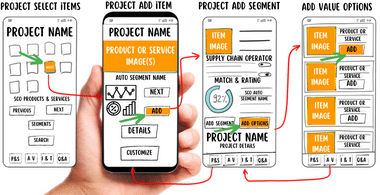
The model works as a simple four-step process for adding segments to a supply chain project: create project profile, add segments, complete knowledge profile, submit for quote.
rifindustries.com/portal-support-projects-segments-qualifications-support/
Advanced Supply Chain Portal (ASCP)
The portal is shown on a desktop platform, where most users are likely to carry out these actions. Its major components are project and segment management, and wizards for the qualification process.

rifindustries.com/operators-account-sco-logistics-api-qualified-balance/
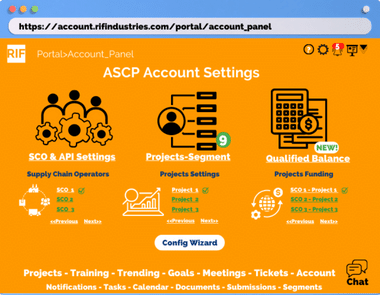
Operators: account settings for SCO/LOG, projects, segments, balances
In the “Accounts” section of the ASCP, the back end manages the connection to supply chain operators (SCO). Wizards with simple step-by-step and “Update All” functions make it as easy as buying any multi-option product online.
rifindustries.com/repository-for-source-code-universal-data-sdk/
Repository model & architecture
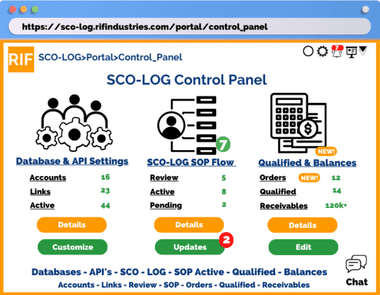
The RIF public and private repository has four components: SCO/LOG best practices with SOP integration; account database API connect with SDK; remote database creation; and real-time public access to supply chain status.
rifindustries.com/about-maynard-dokken-rifindustries-and-solution/#finish-what-we-started
Finish what we started
Ahead of the curve: automation, the digital supply chain twin, analytics everywhere, an open-source security mesh, ecosystem collaboration and sustainability. “We can become the leaders again.”
The vision, and the work to replace today’s outdated model, will restart. RIF is ready to complete the “Next Generation” supply chain model;[4] as they say, earlier is better.
rifindustries.com/idea-concepts-unique-proprietary-marketable-processes/
Step 1: Idea
The starting point is an idea, a vision, an architecture: the intellectual property that may be unique, and could be valuable if protected.
rifindustries.com/protect-ip-trademarks-copyrights-patents/Step 2: Protect
Is the idea unique? If it is, you need to decide how to create a framework to protect it.

rifindustries.com/about-maynard-dokken-rifindustries-and-solution/#the-stages
Purchase product
The first step was purchasing the base product; the next, processing the material and delivering the value-add product.[5]
Add value
Adding value is a critical piece of any business. The first stage emulated the Alibaba model with a more automated structure that takes the complexity out of the process: much as aggregate vendors process material, with an online twist, options selected by the purchaser, then sorting, breaking up and processing the material into a value-add product.
Value-add online portal
The next step was an automated online value-add portal to replace the Alibaba model: a more complete picture of the supply chain process and its levels of stress, with warning colors and reviews from verified sources.[5]


References
- ↑ DIFOT (delivery in full, on time). Wikipedia. en.wikipedia.org
- ↑ RIF Industries: An alternative to resource monopolies. Maynard L. Dokken, the record. maynardldokken.com/rif-industries/#alternative
- ↑ RIF Industries: Origins. Maynard L. Dokken, the record. maynardldokken.com/rif-industries/#origins
- ↑ RIF Industries: Legacy. Maynard L. Dokken, the record. maynardldokken.com/rif-industries/#legacy
- a b RIF Industries: The Advanced Supply Chain Portal. Maynard L. Dokken, the record. maynardldokken.com/rif-industries/#ascp
Every source above was opened and checked on 3 November 2026.
Further reading
- RIF: The model, built. SharedMercantile. sharedmercantile.com
- Search engine results page. Wikipedia. en.wikipedia.org
- Supply chain management. Wikipedia. en.wikipedia.org
- Logistics. Wikipedia. en.wikipedia.org
Background on the subjects of this page, not cited above. Each link was opened and checked on 3 November 2026.