
Portal: projects, segments, qualifications and support
The focus was to simplify the experience, and to create a support environment that maximizes the return for supply chain operators and users alike.[1]
Notice. This is a basic outline. Proprietary components that are still to be protected are left out. These basic portal functions give supply chain operators and portal users an insight into the supply chain portal model; RIF will release the proprietary details once it files a follow-up patent.
Key takeawaysportal
- Six functions run a user’s work: projects, qualification, trending, goals, meetings and tickets.
- Qualification is a profile-building exercise: the operator supplies a video, a quiz and its SOP, and the user confirms they understand them.
- Projects show every segment, with notifications for missing pieces, before a submit sends them to operators for review.
Core functions for the user
A user’s core functions are the projects, qualifications, trending, goals, meetings and tickets sections, all designed to automate projects and let users control and manage them remotely, online.
- Projects are the core of the ASCP, for managing each individual chain.
- Qualification tracks and simplifies knowledge transfer.
- Trending identifies opportunities for the user.
- Goals are set by the user and used by the core AI and ML.
- Meetings enable online, remote management of projects.
- Tickets are a text-based way to track issues.
The project functions are designed to be as simple as ordering anything online: pick your project and qualify. The qualification system helps both the user and the SCO (supply chain operator) complete the order and its tasks quickly, without adding overhead.
The “Projects” lists are created while projects and segments are set up in the “Projects” menu. Segments are added to each project according to the project selected and the user’s options and customizations.
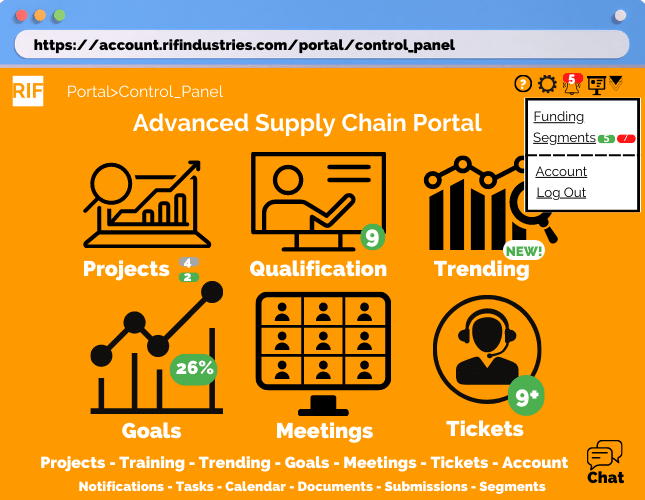
The portal control panel
- Projects
- The core of the Advanced Supply Chain Portal (ASCP) for managing each individual chain. This section manages projects, segments and customizations, and is integrated with every other part of the portal.
- Qualification
- Tracks and simplifies knowledge transfer. It gives supply chain operators (SCO) a view of how much the user knows about their industry vertical. Qualifying for an industry vertical is essentially a profile-building exercise: the SCO provides a video and a quiz to confirm that the user understands the business, and the user confirms they will apply the SOP (standard operating procedures) when working with that product or service. The aim is to shorten the user’s learning curve and reduce the support the SCO must give.
- Trending
- Identifies opportunities for the user. Trends occur in market, costs and level of service for every stakeholder in the supply chain; trending is a real-time analytic view of the user’s opportunities, including those they have already qualified for through the portal’s qualification functions.
- Goals
- Set by the user and used by the core AI and ML: delivery time, ROI, or any other metric the user wants to track while watching their progress. Users can spend their time on business and let the system show the results.
- Meetings
- Enable remote management of projects. This advanced form of support includes building a team to manage large projects, integrated with notifications and project and segment tracking. Users can build a team virtually, with no office or overhead; it also reduces costs for SCOs, and gives the platform a way to grow its user base quickly.
- Tickets
- A text-based way to track issues. Issues are routed to the lowest-cost, highest-resource fix according to the user’s qualification, or level of knowledge. AI and ML in the portal optimize the results, and every party resolves issues in a tracked way: progress, response time and ratings on both sides.
The portal is shown on a desktop platform, where most users are likely to carry out these actions.
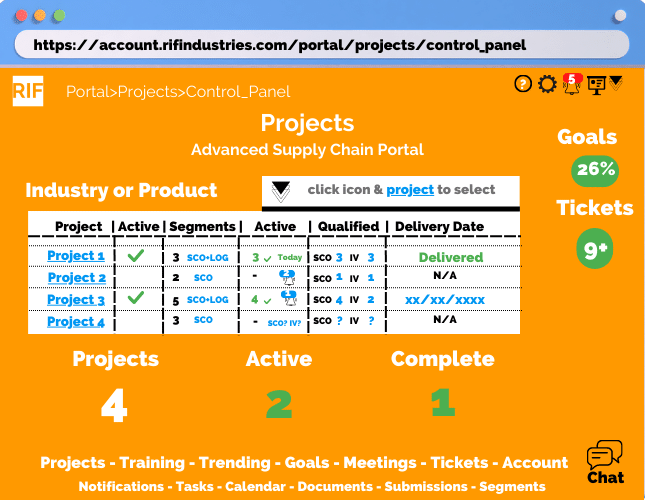
Projects
- SCO: supply chain operators
- LOG: logistics
- Qualified: the industry vertical (IV) and the supply chain operators (SCO) the user is qualified for
Click a project to view its details, including its segments.
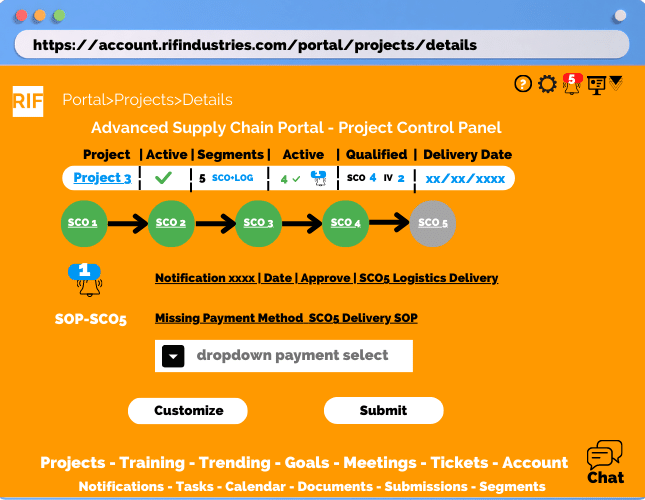
Segments, customization, management
- Notifications for missing pieces
- Customizations
- Qualification notifications
- Payment methods
A “Submit” button sends the project to the SCOs for review.
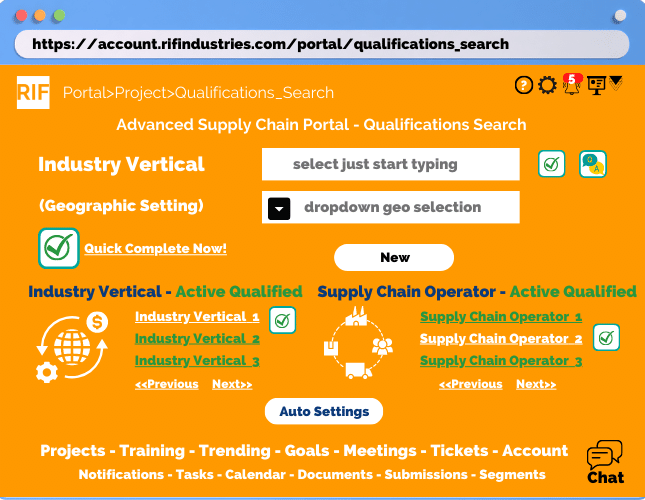
Qualification overview & search
- Industry vertical search
- Links to the status of each IV qualification
- Links to the status of each SCO qualification
- Auto settings, including qualification links for newly created segments
- Quick qualification completion wizard
A “New” button starts an industry vertical search.
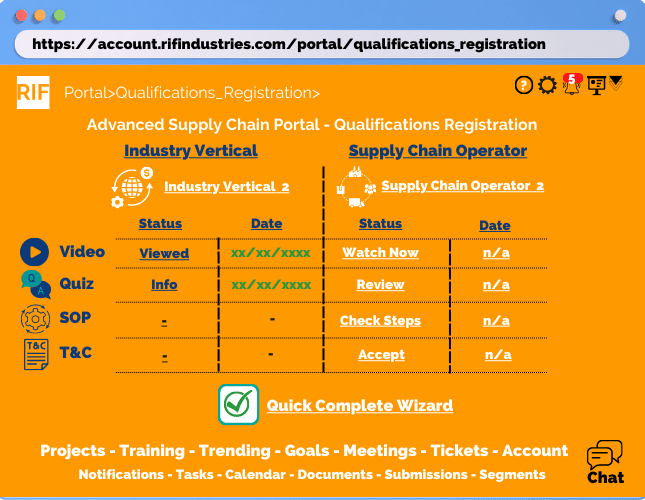
Qualification registration & completion wizard
- A video for both the IV and the SCO
- Q&A or quiz, with profile completion for the IV and basic knowledge for the SCO
- The SCO’s SOP, acknowledged step by step as part of qualification
- Terms and conditions: the product or service provider’s requirements
The screen closes with the quick qualification completion wizard.
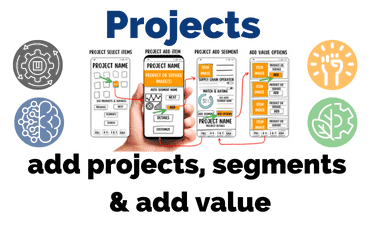
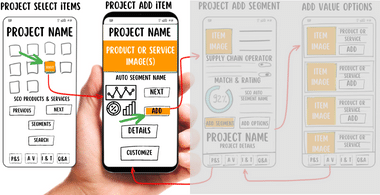
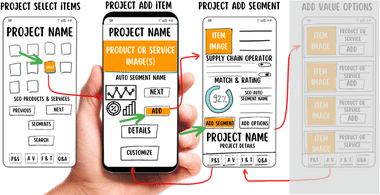
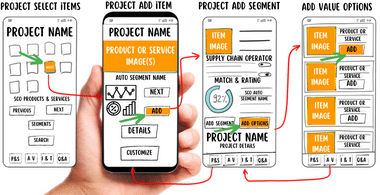
Adding segments, at a glance
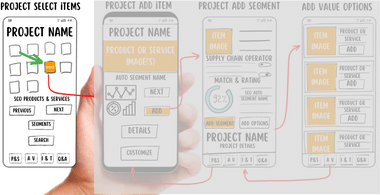
- Adding a segment itemThe user selects the item they want to view, and can click the Segments button for a pop-up of the segments already in the project.
- Review details, add the item and segment to the project“Add” creates a segment named after the SCO in the project automatically; Details or Customize open the project settings.
- Confirm the selection and add the segment“Add Segment” confirms the selection and creates the segment with the SCO’s name; “Add Options” is also available.
- Optional: add-value optionsClick “Add Options”, select options with “Add”, return to the project’s Add Segment screen and, if satisfied, click “Add Segment”. The add-value options then appear in the project segment.
References
- ↑ RIF Industries: The Advanced Supply Chain Portal. Maynard L. Dokken, the record. maynardldokken.com/rif-industries/#ascp
Every source above was opened and checked on 3 November 2026.
Further reading
- RIF: The model, built. SharedMercantile. sharedmercantile.com
- Supply chain management. Wikipedia. en.wikipedia.org
- Standard operating procedure. Wikipedia. en.wikipedia.org
- Artificial intelligence. Wikipedia. en.wikipedia.org
- Machine learning. Wikipedia. en.wikipedia.org
- Logistics. Wikipedia. en.wikipedia.org
Background on the subjects of this page, not cited above. Each link was opened and checked on 3 November 2026.